

Systematic Innovation Training
Workshops and conferences around the country.

TRIZ Certification
One of the cornerstones of the Altshuller Institute.
Stop learning to innovate through trial and error
Learn TRIZ, a methodology developed by Genrick Altshuller for solving problems more efficiently and intuitively.



Notes from the Executive Director - My Feelings and Observations!
Welcome to the Altshuller Institute for TRIZ Studies
The purpose and function of the Altshuller Institute for TRIZ Studies
The Altshuller Institute for TRIZ Studies is a prestigious organization dedicated to promoting the study and application of TRIZ (Theory of Inventive Problem Solving). Named after its founder, Genrich Altshuller, the institute serves as a hub for research, education, and collaboration in the field of TRIZ.
The primary purpose of the Altshuller Institute is to advance the understanding and utilization of TRIZ principles across various industries and domains. It fosters a community of TRIZ practitioners, researchers, and enthusiasts who are committed to new systems and driving innovation.
The Altshuller Institute also plays a crucial role in education and training. It provides a conduit to various educational programs, workshops, and seminars on TRIZ. These initiatives cater to individuals at all levels, from beginners seeking an introduction to TRIZ to experienced practitioners looking to deepen their knowledge. The institute collaborates with universities, research institutions, and industry partners to develop comprehensive training curricula and certifications.
With that said, we facilitated the training and support of two Bioengineering professors at Tulane University, New Orleans, LA. They were very excited about the TRIZ training that was provided. They sought practical tools to help the students with their bioengineering projects.
This Winter Semester, Tulane is offering a 600-level class to their Bioengineering students for the 2nd year. 15 students are taking the class hoping to aid in their class projects and receive certification from AI. I will present more information about the successful implementation of TRIZ in academia and hope that other universities will partner with the Institute and offer similar tools for innovation courses in the future.
UPDATE: Feedback and pictures from the Tulane students.
"The subject matter is very interesting and it's a new way of thinking about problems. I've never before thought about engineering problems in this way, and my ability to solve problems will be forever improved. The teaching team brought a level of casual excitement I hadn't experienced in a course this year. Just a spectacular course that they should offer every semester."



If other professors would like to know more about installing a TRIZ program to help their students succeed in their field of endeavor, let us know. The Institute is ready to help you achieve your goals.
Why should you join the Altshuller Institute?
The Altshuller Institute fosters international collaboration and cooperation in the field of TRIZ. It establishes partnerships with other TRIZ organizations, professional societies, and research institutions across the globe. These collaborations facilitate the exchange of ideas, joint research projects, and the standardization of TRIZ practices, ensuring a unified and consistent approach to problem-solving worldwide. Visit our Membership page for more details.
I seek volunteers to help the Institute turn a corner and revitalize our goals and mission in this new world.
We are in the middle of renewing the AI website and need your help. If you wish to help, send me an email.
Thank you!
To all of our members, colleagues, friends, and extended TRIZ family, I wish you happiness, peace, health, and wealth.
To strengthen your brain, you need to exercise your brain.
Learn TRIZ Methods and become more creative and innovative.

TRIZ will raise your level of thinking and
provide insights into how the world works.
TRIZ can change your life forever!!!
Remember, you don't know, what you don't know!!!
TRIZ Training Schedule
For the latest information about TRIZ training from various Providers, go to TRIZ Training Schedule
Inside TRIZ Article
The First Battery Prototype Using Hemoglobin
by Andrew Corselli February 2024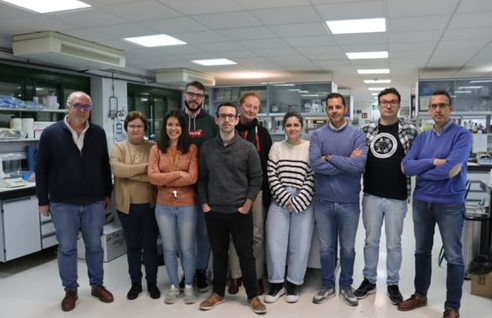
A team at the University of Cordoba has developed a battery that uses hemoglobin as an electrochemical reaction facilitator, functioning for around 20-30 days.
"Our hemoglobin-based zinc-air battery has similar working conditions to the human body. Because of that, we consider that is an appropriate battery for any electronic devices integrated into the human body,” said Lead Author Manuel Cano Luna. (Image: The researchers) Hemoglobin is a protein present in red blood cells. It is responsible for conveying oxygen from the lungs to the different tissues of the body (and then transferring carbon dioxide the other way around). It has a very high affinity for oxygen. It is fundamental for life, but, what if it were also a key element for a type of electrochemical device in which oxygen also plays an important role, such as zinc-air batteries?
READ more
Prof. Toru Nakagawa in Japan is doing some significant TRIZ work. For some time now, he has been leading a worldwide
effort to provide a map of TRIZ organizations. This daunting task has been an effort of love and a driving force for Toru.
His global thinking and desire to advance TRIZ need to be recognized and supported by the entire TRIZ community.
AI has been publishing Toru's Newsletters for WTSP for some time, and I hope you will take the time to review and support his work.
Updated: 3 February 2024
Toru Nakagawa (OGU, WTSP Project Leader)
Dear TRIZ Leaders/colleagues,
Hello, how are you?
I wrote in my last Update Announcement (Feb. 4):
Last December and January, I was working mostly on the issue of "Short-Term Prediction of Earthquakes, Research
and Application".
This is a crucial issue in Japan, because we experienced the Hanshin-Awaji EQ Disaster (1995) and
the East-Japan EQ Disaster (2011)
and now an even larger EQ (Nankai EQ) is foreseen in the central and west regions in Japan
with the probability of 70-80% in 30 years.
Seismic Society of Japan (SSJ) and the Government regard the short-term prediction of earthquakes
is currently impossible and decline to make efforts for such a research.
I joined Earthquake Prediction Society of Japan (EPSJ) in 2015 and am now trying to promote a research project in EPSJ
(a small academic society with only about 100 members).
.Best wishes,
Toru Nakagawa
- CATEGORY: TRIZ NEWS
Powerful solutions grow on TRIZ!
Many household-name Fortune 500 companies use TRIZ, but the methodology is far from a household name. TRIZ is a way of thinking, a set of tools, a methodology, a process, a theory, or even possibly a deep science, which seems to be gradually shaping up as ‘the next big thing.’ TRIZ, pronounced ‘treez’, is an acronym for the Russian word that translates as ‘the theory of inventive problem-solving.’
From its roots in patent analysis by Genrich Altshuller in the late 1940s, TRIZ has grown and is today an impressive and valuable body of work that is now being applied by leading organizations in North America, Europe, and Asia. Some of these companies include:
Allied Signal, Amoco, BAE Systems, Boeing Corporation, Brunswick-Life Fitness, Cabot Corporation, Chrysler, Daimler Chrysler, Dana, Delphi Corporation, Dow Chemical, Dura Automotive, Eastman Chemical, Ford, GM, Hewlett-Packard, Hitachi, Honeywell, IBM, International Truck, Johnson & Johnson, LG Electronics, Lockheed Martin, Motorola, Kimberly-Clark, Kodak, McDonnell Douglas, NASA, National Semiconductor, Nortel, Otis Elevator, Panasonic, Parsons, Peugeot, Procter & Gamble (P&G), Samsung, Rockwell, Shell, Rohm and Haas, Rolls Royce, Teck Cominco, Toyota, TRW, UNISYS, United Technologies, Visteon, Xerox, and more.
Innovation and problem-solving are generic skills and can be applied across many different domains; make someone more effective in one domain, and they will also be more effective in others. Knowledge of TRIZ will help to increase the productivity of everyone who has some training in and practices this powerful methodology.
TRIZ Works
Here are some fundamental factors that point to TRIZ as an effective and transformational methodology:
- It is very general.
- It is grounded in a reliable body of knowledge, the growing patent base.
- The scenarios it generates bypass the psychological inertia of team members.
- It can be used with other quality processes, removing roadblocks and speeding up decision-making.
- It reduces the resources required to generate a solution set.
- It is rapid in generating solution concepts, relative to other methods.
- It can be taught, and applied, at any level of education, from school children to management consultants to PhD scientists.
Help us bring TRIZ to the World 
Altshuller Institute is looking for financial Sponsors to sustain our year-long activities. Please review the attached file for Legacy Support and find a comfortable level where you can help AI.
We have many levels of support that will benefit your company or organization. Help us spread TRIZ. There are a lot of problems that can be solved with TRIZ. Let's solve them together.
Send an email to This email address is being protected from spambots. You need JavaScript enabled to view it. and let us know that you want to help. Sponsorship is an exciting way to get maximum exposure for your group to TRIZ at a very low cost.
Bring Innovation and Creativity to your organization in a fast and meaningful way!
- Details
- Category: Home Page